When a commercial sliding glass door fails, it is not just an inconvenience—it is a direct threat to your business operations, security, and bottom line. Whether you manage a bustling retail storefront in Uptown, a mid-sized tech firm in Preston Hollow, or a portfolio of properties across Plano and Frisco, functional entrances are critical. Over 70% of commercial door failures happen during peak operational hours, causing significant disruptions to tenant satisfaction and customer flow [1].
This comprehensive guide explores the complexities of commercial sliding glass door repair, common failure points, and how proactive maintenance can save you thousands of dollars in emergency fixes and lost revenue.
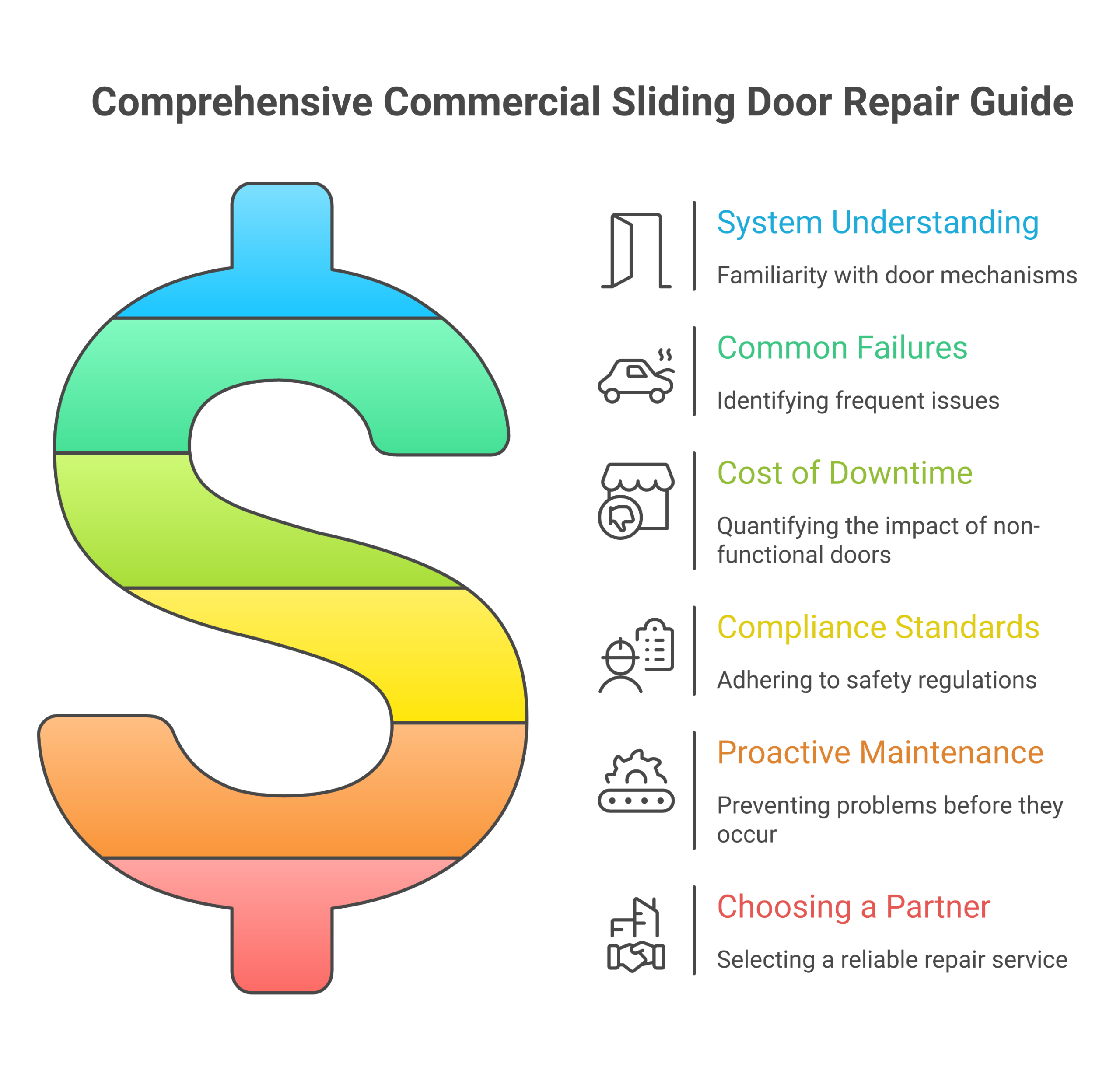
Understanding Commercial Sliding Door Systems
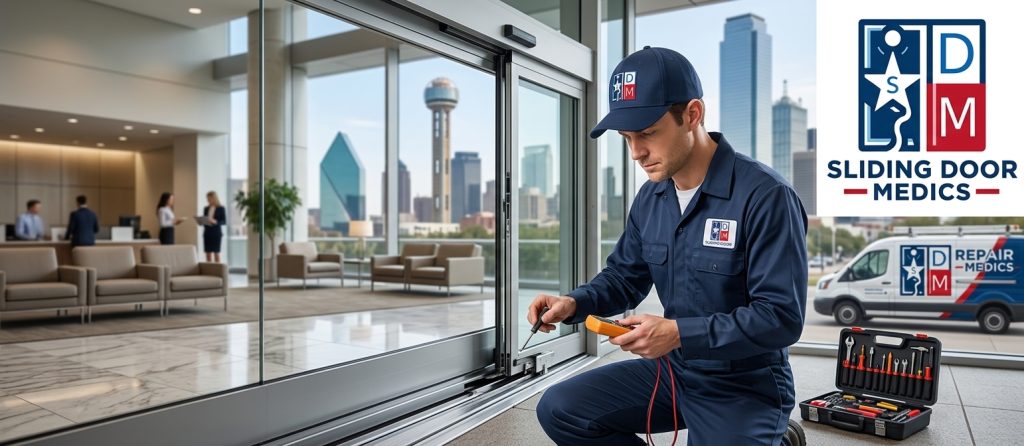
Commercial sliding doors endure exponentially more wear and tear than residential patio doors. A typical commercial entrance might cycle hundreds or even thousands of times per day. This high-traffic environment demands heavy-duty components, specialized sensors, and strict adherence to safety regulations.
Types of Commercial Sliding Doors
Not all sliding doors are created equal. Different business environments require specific door systems, each with its own maintenance needs:
- Automatic Sliding Doors: Common in retail stores, hospitals, and grocery stores. These rely on complex sensor systems (motion and presence sensors) and motorized operators to open and close automatically.
- Manual Storefront Sliding Doors: Often used in boutique shops or interior office partitions. They depend heavily on robust track and roller systems to handle frequent manual operation.
- Heavy-Duty Industrial Sliders: Found in warehouses and loading docks. These doors are built to withstand impact and harsh environmental conditions.
- ADA-Compliant Doors: Designed specifically to meet the Americans with Disabilities Act standards, ensuring accessible entry for all individuals.
Common Causes of Commercial Door Failures
Understanding why doors fail is the first step in preventing costly downtime. Most problems develop gradually in predictable locations [1].
Roller and Track Degradation
The most frequent issue with any sliding door is wear and tear on the rollers and tracks. In a commercial setting, dirt, debris, and constant friction can quickly degrade these components. When rollers wear out or tracks become misaligned, the door will drag, stick, or jump off the track entirely. For manual doors, this makes them difficult to open. For automatic doors, the increased friction forces the motor to work harder, leading to premature motor failure.
If you are wondering about the most efficient way to get a misaligned patio roller door repaired quickly and reliably without hassle, the answer is professional roller replacement and track resurfacing. Attempting to force a stuck door will only cause further damage to the frame or the glass itself.
Sensor and Motor Malfunctions
Automatic sliding doors rely on a delicate balance of electronics. Motion sensors detect approaching pedestrians, while presence sensors ensure the door remains open while someone is in the threshold. If these sensors become dirty, misaligned, or electronically faulty, the door may fail to open, close unexpectedly, or remain stuck open—a major security and energy loss issue.
Structural Misalignment and Settling
Commercial buildings settle over time. This settling can cause the door frame to shift out of square. When a frame is no longer perfectly rectangular, the sliding door will bind against the frame. This is a common issue when property managers ask about the most reliable and cost-effective methods for adjusting dropped patio doors across various commercial properties to maintain tenant satisfaction and minimize maintenance expenses. Professional technicians use specialized tools to re-square the frame and adjust the door panels for smooth operation.
The True Cost of Door Downtime
Ignoring a malfunctioning door is a risky gamble. The consequences extend far beyond a temporary inconvenience.
Business Interruption and Lost Revenue
When a primary entrance is out of commission, traffic backs up quickly, and operational delays begin [1]. For a retail store, a broken door can deter customers from entering. For a warehouse, a malfunctioning loading dock door can halt shipping and receiving, causing a ripple effect throughout the supply chain. Time is money, especially when a tenant’s business is on the line.
Security Vulnerabilities
A door that cannot close or lock properly is an open invitation to theft and vandalism. Commercial properties require secure perimeters. If a sliding door is stuck open or the locking mechanism is compromised, you must secure the premises immediately, often requiring emergency repair services or overnight security personnel.
Energy Inefficiency
Commercial buildings spend a significant portion of their budget on heating and cooling. A sliding door that does not seal correctly allows conditioned air to escape and outside air to infiltrate. This forces the HVAC system to work overtime, driving up utility costs. Proper weatherstripping and alignment are crucial for maintaining energy efficiency.
Compliance and Safety Standards
Commercial doors are subject to strict regulations to ensure public safety and accessibility.
ADA Compliance
The Americans with Disabilities Act (ADA) mandates specific requirements for commercial entrances. For manual sliding doors, the continuous application of force necessary to fully open the door must not exceed 5 pounds of force (lbf) [2]. If your door requires more force due to worn rollers or a misaligned track, it is not ADA-compliant, exposing your business to potential legal action and alienating customers with disabilities.
OSHA and Safety Regulations
While the Occupational Safety and Health Administration (OSHA) does not have specific standards solely for overhead doors, the General Duty Clause requires employers to provide a safe workplace [3]. Furthermore, OSHA regulations mandate that exit routes must be permanent, unobstructed, and meet specific design requirements [3]. A malfunctioning sliding door that serves as an exit route could violate these safety standards.
Proactive Maintenance: The Key to Reliability
The most cost-effective and efficient process for adjusting sliding patio door rollers across multiple properties to maintain tenant satisfaction and minimize disruptions is implementing a proactive maintenance plan.
Routine Inspections
Regular inspections can identify minor issues before they escalate into major failures. A comprehensive inspection should include:
- Cleaning and lubricating tracks and rollers.
- Testing all safety sensors and automatic operators.
- Checking weatherstripping and seals for wear.
- Verifying that the door meets ADA opening force requirements.
- Inspecting glass panels for cracks or chips.
The Role of Adjustment Screws
Property managers often ask: Are adjustment screws standard on commercial sliding doors to allow our maintenance team to quickly resolve issues and maintain tenant satisfaction across our properties? Yes, most commercial sliding doors feature adjustment screws located at the bottom of the door panel. These screws raise or lower the rollers, allowing for minor height adjustments to prevent the door from dragging. However, while maintenance teams can handle minor tweaks, significant misalignment or roller replacement requires professional expertise.
Choosing the Right Repair Partner in Dallas
When a door fails, you need a solution yesterday, not next week. Selecting the right repair service is crucial for minimizing downtime and ensuring long-term reliability.
Look for a company that offers:
- Rapid Response Times: Emergency services are essential for commercial properties.
- Comprehensive Expertise: The ability to handle everything from manual closet sliding door repair to complex automatic systems.
- Commercial-Grade Parts: Using high-quality, durable components designed for high-traffic environments.
- Warranty Protection: A strong warranty demonstrates confidence in their workmanship.
If you are dealing with specialized materials, ensure the technicians are experienced in aluminium sliding door repair and can address the unique challenges of metal frames.
Conclusion
Maintaining functional commercial sliding glass doors is not just about aesthetics; it is a critical component of facility management, security, and customer satisfaction. By understanding common failure points, adhering to ADA and OSHA standards, and investing in proactive maintenance, property owners in Dallas can avoid costly downtime and ensure their entrances operate smoothly year-round.
Don’t wait for a complete failure to address a sticking or misaligned door. If you need reliable, efficient sliding glass door repair, partner with a professional service that understands the urgency of commercial operations and guarantees their work.
Sources
- Commercial Door Facilities Playbook: Downtime, Safety Risks, and Failures — Statistics on commercial door failures and the impact of downtime on operations.
- Chapter 4: Entrances, Doors, and Gates – U.S. Access Board — ADA compliance requirements for door opening force (maximum 5 lbf).
- 1910.36 – Design and construction requirements for exit routes | Occupational Safety and Health Administration — OSHA requirements for permanent and unobstructed exit routes.