
Mortise lock
Also called: mortise hook lock, lock body
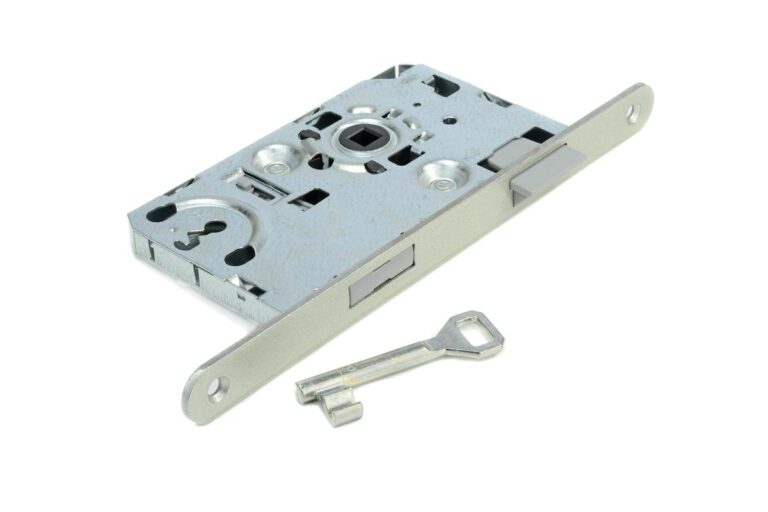
Quick answer: a mortise lock is a lock body that sits inside a pocket (the mortise) cut into the edge of a door panel. On a sliding patio door, it holds the hook that grabs the keeper on the frame. The handle on the face of the panel works it through a small tailpiece.
- Handle set, screwed through the face of the panel
- Pocket, the mortise cut into the panel edge
- Lock body, which slides into the pocket
- Faceplate, screwed to the panel edge, with the hook slot
- Hub, where the thumb turn’s tailpiece fits
Replacing a mortise lock, in order
On most sliding doors the lock comes out without taking the panel out of the frame. Go in this order.
-
Measure before you buyNote the door brand, then measure the faceplate, its screw spacing and where the hook sits.
Safe to do yourself
-
Take off the handleRemove the screws that hold the inside and outside handles together.
Safe to do yourself
-
Slide the lock outOpen the door, remove the faceplate screws on the panel edge and pull the lock body out.
Take care: keep the panel in its track
-
Fit and testSlide in the new lock, refit the handle, then adjust the keeper until the hook catches.
Take care: test it with the door open first
Fix it yourself or call a pro
- Safe yourselfTighten loose handle screws, blow dust out of the hook slot and use a dry lubricant, not oil.
- Take careSwapping the lock body like for like. Keep the panel in its track, and never file or drill the panel edge to make a lock fit.
- Call a proNo matching lock, a pocket that has to be cut bigger, a multipoint lock, or damage after a break-in attempt.
More on this: why a sliding door won’t lock or latch.
Mortise and the other locks you will hear about
Lock worn, loose or broken?
Select Sliding Doors handles sliding door repair, including mortise lock replacement, across Dallas-Fort Worth. Mon to Sat, 7am to 10pm.
Questions people ask
How do I know if my patio door has a mortise lock?
Open the door and look at the edge of the panel by the handle. A narrow metal plate set flush in the edge, with a slot for the hook, means a mortise lock.
Will any mortise lock fit my door?
No. Body size, faceplate shape, screw spacing and hook position vary by brand and door age. Some replacements are made to fit several doors, but check every measurement first.
Do I need a new handle too?
Not always. The old handle can stay if its tailpiece fits the new lock’s hub. Handles and locks are often sold as a matched set.
Related terms
Photo: own media library. Diagram: Select Sliding Doors.