
Quick answer: Most sliding doors that won’t lock have dropped slightly, so the lock hook swings past the keeper on the frame instead of catching it. Open the door, flip the lock lever and watch the hook. If it moves freely, the lock is fine and you need to adjust the keeper or the rollers.
A sliding door that won’t lock is stressful, especially at night. The good news: in most cases the lock itself is not broken. Something has shifted by a few millimeters, and the hook no longer meets the part it is meant to grab. This guide helps you find which part moved and fix it.
Is it safe to fix this yourself?
| Level | What it covers |
|---|---|
| Safe to do yourself | Testing the hook, cleaning the track and lock pocket, tightening handle screws, moving the keeper on the frame, using a dry lubricant. |
| Take care | Adjusting the roller screws to raise the door, and swapping the lock body. Work slowly and keep the door in its track while you do it. |
| Call a pro | Anything that needs the glass panel taken out of the frame, a seized or broken roller, a bent frame, or damage after a break-in attempt. Glass panels are heavy; never lift one alone. |
Find the cause
Most patio doors use a hook lock. When you flip the lever, a metal hook swings out of the door edge and catches a keeper (also called a strike) screwed to the frame. Each problem below breaks that handshake in a different way.
| What you notice | Likely cause | What to do |
|---|---|---|
| Hook swings out fine with the door open, but won’t catch when closed | Door has dropped, or the keeper has shifted | Mark the hook to see where it hits, then move the keeper or raise the rollers |
| Lever feels loose and the hook doesn’t move | Handle screws loose, or the lever has slipped off the lock’s tailpiece | Remove the handle, reseat it and tighten the screws |
| Lever is stiff or gritty | Dust and grit inside the lock body | Blow it out and use a dry lubricant |
| Door stops short of the frame | Debris in the track, a worn roller or a bunched weatherstrip | Clean the track and check the rollers |
| Lever moves but the hook stays inside the door | Broken spring or part inside the lock body | Replace the lock body |
| Key won’t turn in the outside cylinder | Dirty or worn cylinder | Try graphite or dry lube; if it still sticks, replace the cylinder |
How to fix it: step by step
You’ll need:
- Phillips and flathead screwdrivers
- A flashlight and a vacuum with a crevice tool
- A dry erase marker, lipstick or a strip of painter’s tape
- Dry lubricant (PTFE dry spray or powdered graphite)
- Thin plastic shims, if the keeper needs to move outward
- Test the lock with the door open. Slide the door open a few inches and flip the lever. If the hook swings out smoothly, the lock works. Skip to step 3. If it doesn’t, start with step 2.
- Check the handle. Remove the two screws that hold the inside and outside handles together. Make sure the lever’s tab sits properly in the slot on the lock body. Reassemble and tighten firmly, but don’t crush the handle.
- Make sure the door closes fully. Vacuum the track and look for pebbles, pet hair or a loose piece of weatherstrip. The door should meet the frame evenly from top to bottom. If it hits the frame at the top or bottom first, it is out of level.
- Find where the hook lands. Rub marker or lipstick on the tip of the hook. Close the door gently and flip the lever. Open it and look at the keeper. The mark shows whether the hook is hitting too high, too low or not reaching at all.
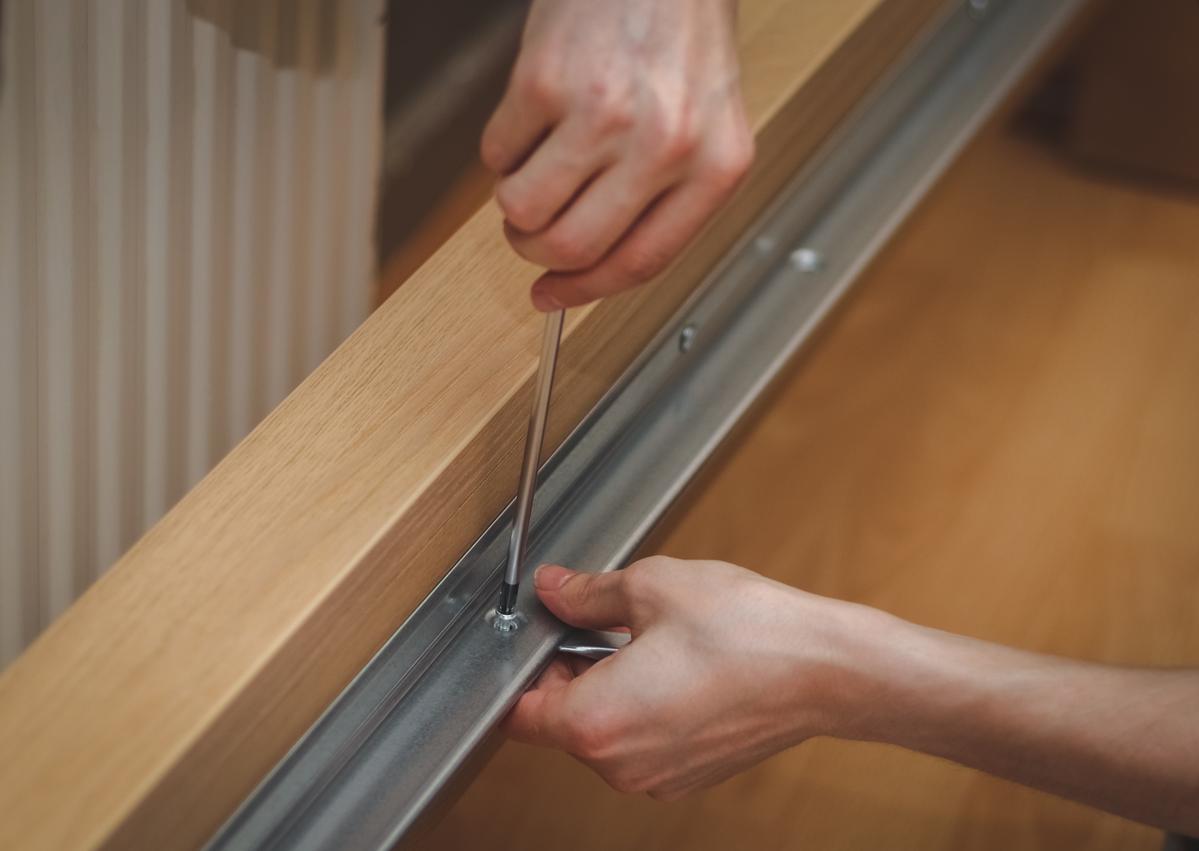
- Move the keeper. Most keepers have slotted screw holes. Loosen the screws, slide the keeper up or down to meet the mark, and retighten. If the hook falls short, add a thin shim behind the keeper to bring it closer.
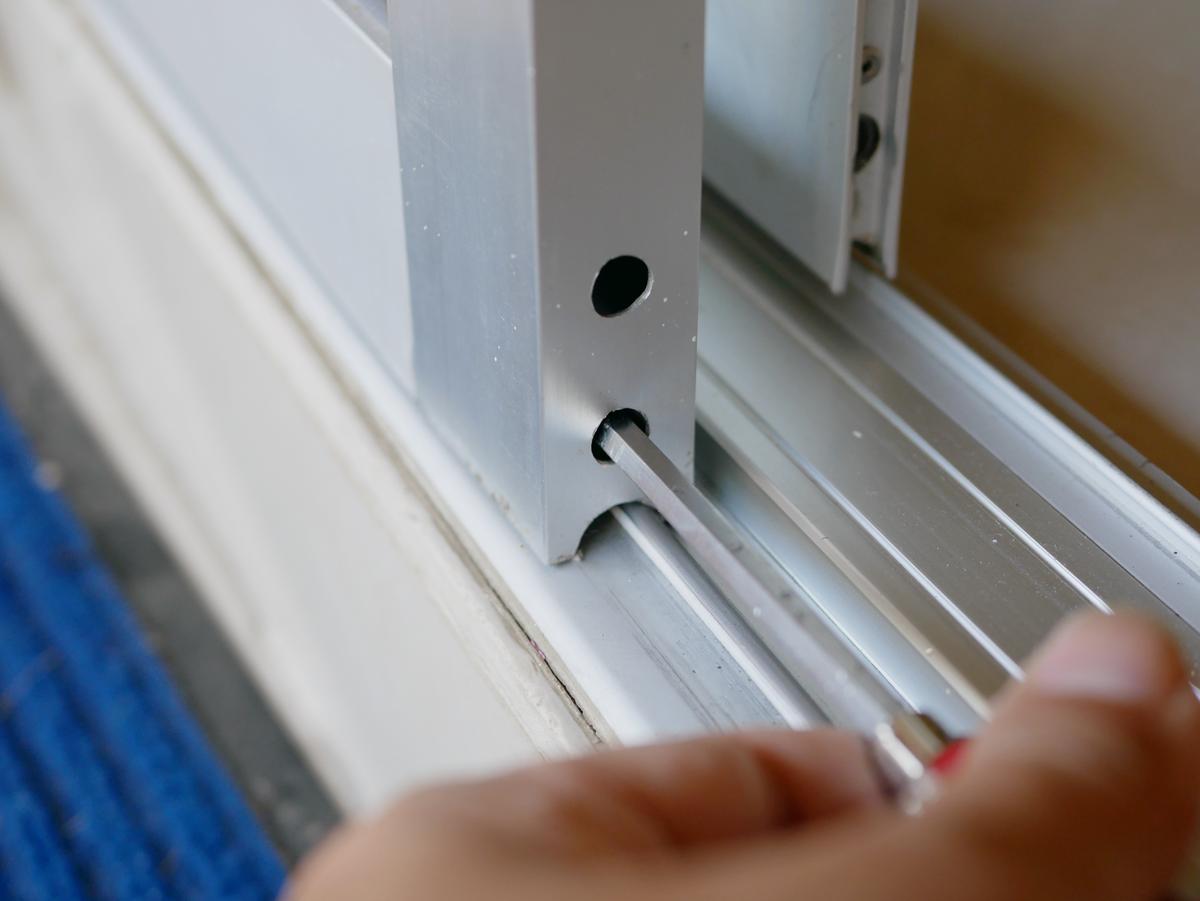
- Or raise the door. If the hook sits well below the keeper, the door has probably dropped. Look for adjustment holes at both ends of the bottom of the door, sometimes behind small plastic plugs. Turn each screw a quarter turn at a time and check how the door sits. Raise both ends evenly so the door stays square. If the screws won’t turn or the door won’t lift, the rollers may be worn out.
- Clean and lubricate the lock. Blow dust out of the hook slot with canned air. Apply a short burst of dry lubricant and work the lever ten or so times. Avoid oil and grease here; they collect dust and make the lock stickier over time.
- Replace the lock body if needed. Remove the handle, then the screws on the edge of the door that hold the lock in its pocket. Slide the lock out and take it with you when buying a replacement. Hole spacing and hook shape vary by brand, so match them exactly.
If the door has dropped because the rollers are worn, adjusting will only buy time. In that case the rollers need replacing; see our sliding door repair service.
Secure the door tonight
Until the lock catches again, lay a wooden dowel or a cut broom handle in the inside track, between the closed door and the frame. It should fit snugly. A store-bought security bar or a foot lock works the same way. This stops the door from sliding open, even if the lock does nothing.
When to call a pro
- The hook moves but the lock still won’t hold after adjusting the keeper and rollers.
- The roller screws are seized, stripped or turn without lifting the door.
- The door frame looks bent, or the door rubs on one side.
- You see pry marks, a bent hook or a cracked keeper (signs of a forced entry attempt).
- Your door has a multi-point lock (several hooks along the edge), which needs more careful setup.
- The fix means taking the panel out of the frame.
A door that won’t lock is a security problem, so it is worth getting it right. A technician can check the lock, keeper and rollers together during a sliding door lock repair, so the real cause gets fixed, not just the symptom.
Not sure, or the fix didn’t hold? Select Sliding Doors repairs sliding door locks, latches and rollers across Dallas–Fort Worth.
Call 469-915-5230 (Mon to Sat, 7am to 10pm) or send us a message.
Frequently asked questions
Why does my sliding door lock not catch?
Usually the door has settled lower, or the keeper on the frame has shifted. The hook still swings out, but it passes above or below the keeper. Moving the keeper or raising the rollers lines them up again.
Can I replace a sliding door lock myself?
Often, yes. On most doors the lock body slides out of the door edge after you remove the handle and two screws. The hard part is finding an exact match, so bring the old lock to the store or note the brand and measurements.
Is WD-40 OK for a sliding door lock?
It can loosen grime, but it leaves a light oily film that attracts dust. For the lock and key cylinder, a dry PTFE spray or powdered graphite lasts longer and stays cleaner.
My door locks only if I push it hard. Is that a problem?
Yes. It means the hook barely reaches the keeper, so the lock may not hold if someone pulls on the door. Adjust the keeper or the door height until it locks with a normal push.
Why did my lock stop working after a hot spell or a cold snap?
Frames expand and shrink with temperature, and the house itself can shift slightly. In North Texas, sudden swings between heat and cold can change the fit just enough to throw a lock out of line.