Is your sliding door sticking, grinding, or just refusing to budge? You’re not alone! Many homeowners and commercial property managers in Dallas, TX, experience the frustration of a stubborn sliding door. It disrupts your flow, compromises security, and can even impact your energy efficiency, especially when that unforgiving Texas heat or a chilly winter breeze tries to sneak in. But what exactly do you put on sliding door tracks to get them back to their smooth-gliding best? Let’s dive into the practical solutions that bring quiet efficiency back to your space.
Why Your Sliding Doors Get Stuck: A Dallas Perspective
Before we talk about solutions, it helps to understand the problem. Sliding doors, whether they lead to your patio, closet, or serve as an entrance to a commercial building, rely on a clear track and functional rollers. Over time, these components face a gauntlet of challenges:
- Dust and Debris: Dallas weather means dust, pollen, and even small insects can accumulate in tracks, acting like sandpaper on your rollers.
- Lack of Proper Lubrication: Tracks and rollers need specific types of lubrication to operate smoothly. Without it, friction builds, making your door heavy and difficult to move.
- Worn or Damaged Rollers: Rollers, often made of nylon or steel, wear down, crack, or corrode. This is a primary culprit for a misaligned patio roller door and the primary reason “why won’t my patio screen doors close” without a fight.
- Misalignment: Over time, doors can sag or tracks can warp, leading to poor alignment. This isn’t just an inconvenience; it can also affect the door’s ability to close securely and maintain energy efficiency for your family.
Understanding these issues is the first step toward a smoother sliding experience.
The Foundation of Smooth Operation: Thorough Cleaning
You wouldn’t grease a dirty bike chain, right? The same principle applies here. Effective lubrication starts with a sparkling clean track. Skipping this step is a common mistake that actually makes the problem worse.
Step 1: Safety First
Before you start, ensure the door is secure. If possible, gently lift the door off its track (this may require a helper for heavier patio doors). Always wear gloves and eye protection to guard against dust and debris.
Step 2: Clear the Path
Start by using a stiff brush or a vacuum cleaner with a narrow attachment to remove loose dirt, dust, and any small objects lodged in the track. This includes both the bottom and top tracks, as debris can affect overall door movement.
Step 3: Deep Cleaning the Track
For caked-on grime and stubborn dirt, a dry brush or vacuum isn’t enough. Create a solution of warm, soapy water using a mild dish soap. Dip a stiff-bristled nylon brush (an old toothbrush works wonders for tight spots) into the solution and scrub the track thoroughly. For particularly greasy buildup, a mild degreaser or rubbing alcohol applied with a cloth can cut through the muck effectively. After scrubbing, wipe the track clean with a damp cloth, then immediately dry it completely. Residual moisture can lead to corrosion.
Step 4: Don’t Forget the Rollers
If you’ve removed the door, clean the rollers themselves. Use a damp cloth to wipe away any accumulated dirt or hair. Rotate the rollers manually to ensure they spin freely and clean all surfaces. If a roller is visibly cracked, chipped, or refuses to turn, it’s likely a candidate for replacement, not just cleaning and lubrication.
The Secret to Effortless Gliding: Choosing the Right Lubricant
Once your tracks are spotless, it’s time to choose the best lubricant for sliding door tracks. The right choice makes all the difference, providing long-lasting smoothness without attracting more dirt.
Recommended Lubricants
The consensus among professionals for what to use on sliding glass door track is a silicone-based lubricant. Silicone sprays are highly recommended for sliding door tracks because they dry quickly, resist water, and do not attract dirt, making them suitable for various materials like metal, rubber, vinyl, and plastic [1]. They create a slick, low-friction surface without leaving a greasy residue that can become a magnet for dust and grime. For heavy-duty applications, a dry graphite or Teflon-based lubricant can also be effective, but silicone is generally the preferred option for home use. Many people also ask about wax for sliding door tracks; while some specialty waxes exist, they often don’t offer the same long-term, non-dirt-attracting properties as silicone.
What NOT to Use
This is crucial: avoid oil-based lubricants like WD-40 or petroleum jelly. While they might offer temporary relief, they are detrimental in the long run. Oil-based products attract and hold onto dust, dirt, and pet hair, quickly turning your clean track into a sticky mess that actually increases friction. They can also degrade plastic and rubber components over time, leading to more frequent repairs.
How Often to Lubricate
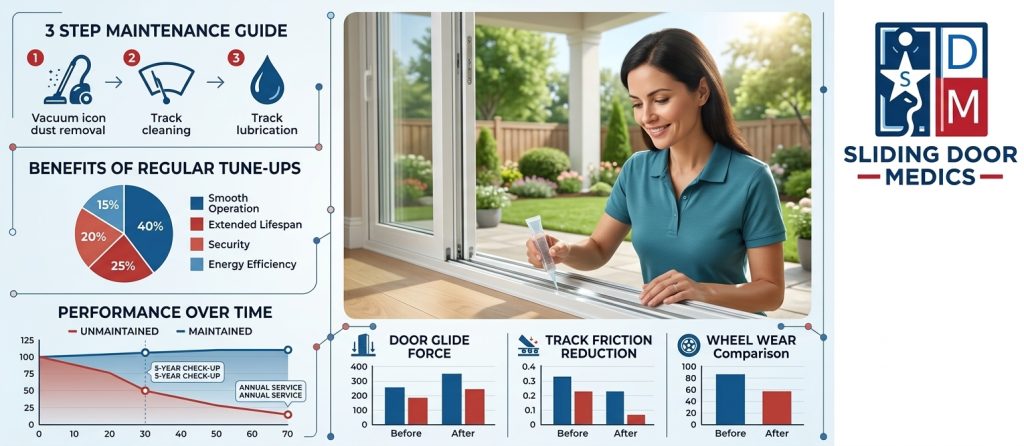
For optimal performance, plan on lubricating your sliding door tracks at least twice a year, or whenever you notice the door starting to stick or drag. In dusty Dallas environments or for high-traffic doors, quarterly maintenance might be more beneficial. Regular routine inspection and adjustment of sliding patio door rollers can significantly extend the life and smoothness of your doors.
Applying Lubricant Like a Pro
Now that you have the right product, applying it correctly ensures maximum effectiveness.
The Art of Application
Hold the silicone spray can approximately 6-8 inches from the track. Apply a thin, even coat along the entire length of both the top and bottom tracks. Focus especially on the areas where the rollers make contact. If your door is still removed, spray the rollers directly, ensuring they are fully coated and spin freely. Allow the lubricant to dry for a few minutes before re-installing the door.
Testing and Adjusting
Once the door is back in place, gently slide it back and forth several times to distribute the lubricant evenly. You should feel an immediate improvement in smoothness. If the door still feels stiff or struggles, it might be more than a lubrication issue. Sometimes, adjusting sliding patio door rollers or the door’s alignment can make a big difference. Many modern sliding patio doors do have adjustment screws to help ensure they close securely and maintain energy efficiency.
Beyond Lubrication: When to Call the Dallas Pros
While cleaning and lubricating are fantastic for routine maintenance, sometimes your sliding door needs more help. If you’ve tried everything and your door is still sticking, grinding, or simply won’t close properly, it’s time to consider professional assistance. This is especially true if you notice:
- Worn or Damaged Rollers: If a roller is broken or flattened, no amount of lubricant will fix it. Professional replacement is needed.
- Bent or Warped Tracks: A damaged track can prevent smooth movement. Attempting to repair a bent track yourself can cause further damage.
- Misaligned Door: A door that’s significantly dropped or off-kilter requires careful adjustment that often goes beyond simple screw tightening. For commercial property owners, what is the most cost-effective and efficient process for adjusting sliding patio door rollers across multiple properties? Often, it’s calling in the experts.
For homeowners and commercial property owners in Dallas, TX, dealing with a stubborn door, seeking professional sliding door repair near me is often the most efficient and reliable method. A reputable service can quickly and competently fix a misaligned patio roller door at your home or even handle comprehensive ADA compliant door repair Dallas TX for businesses, ensuring a flawless result with minimal personal oversight or follow-up. They understand that time is your most valuable asset and can deliver quick, quality work without you having to micromanage every detail.
Conclusion
Keeping your sliding door tracks clean and properly lubricated with the right products is key to maintaining a smooth, efficient home or business environment. Regular maintenance can prevent frustrating issues and extend the lifespan of your doors. However, if your sliding door’s woes go beyond a simple cleaning and greasing sliding door tracks, don’t hesitate to reach out to the experts. We believe in providing solutions that last, not just a quick fix, with a strong guarantee that you won’t have to deal with the same problem again. We can handle everything from a simple adjustment to a full sliding glass door repair. So, when you need reliable, efficient, and guaranteed sliding door or window services in the Dallas, TX area, remember we’re just a call away. We’re ready to fix it right, the first time!

Frequently Asked Questions
Q: Can I use cooking oil as a lubricant for my sliding door tracks?
No, absolutely not. Cooking oils, like other oil-based products, will attract dirt and dust, creating a sticky, gunky mess that will worsen your door’s performance over time and can even damage components.
Q: How long does silicone lubricant last on tracks?
Typically, a good quality silicone lubricant can keep your tracks smooth for 3 to 6 months. However, in high-use areas or dusty environments, you might need to reapply more frequently.
Q: What’s the difference between silicone spray and WD-40?
Silicone spray is a lubricant that dries clean and repels water and dirt, making it ideal for sliding tracks. WD-40 is primarily a water displacement and rust-preventative product. While it can temporarily loosen seized parts, its oil-based formula attracts grime, making it unsuitable for long-term track lubrication. Stick to silicone for the best results when lubricating sliding door tracks.