
Quick answer: A sliding door that is hard to open usually has a dirty track or rollers set so low that the door drags. Vacuum and wipe the bottom track first. Then turn the roller screws at the bottom ends of the door a quarter turn at a time to lift it off the sill.
Is it safe to fix this yourself?
| Level | What it covers |
|---|---|
| Safe to do yourself | Cleaning the tracks and weatherstrip, adding silicone spray, and turning the roller screws with the door in place. Tightening loose screws is fine too. |
| Take care | Straightening a small dent in the track, or turning an adjustment screw that feels stuck. Never force a seized screw, because the roller housing can crack. |
| Call a pro | Anything that means lifting the glass panel out of the frame. Glass doors are heavy and tempered glass can shatter. Use two people at least, or call a pro. |
Find the cause
These checks take about five minutes and need no tools. Unlock the door and slide it halfway. Look at the bottom edge: you should see a thin, even gap between the door and the sill. Run a finger along the track. Then slide the door slowly and listen.
| What you notice | Likely cause | What to do |
|---|---|---|
| Gritty, crunchy feel, with dirt or hair you can see in the track | Dirty track | Vacuum, scrub and dry the track (steps 2 and 3 below) |
| Track looks clean but the door feels heavy or squeaks | Dry track, or old oil and grease that has turned gummy | Clean off the residue, then use a light silicone spray |
| Bottom of the door scrapes the sill, or the gap is uneven end to end | Rollers set too low, or set unevenly | Raise both rollers with the adjustment screws |
| Grinding or bumping, and adjusting the screws doesn’t help | Worn, flat or broken rollers | Plan to replace the rollers |
| Door catches at the same spot every time | A dent in the track or something stuck in it | Clear the track, then check the rail for damage |
| Door rubs the frame at the side or top | Door out of line, or the frame has shifted | Even out the rollers; if the frame moved, call a pro |
| Only stiff on cold mornings | Stiff weatherstrip, contraction or a little ice | See our guide to a patio door that is hard to open in winter |
How to make a sliding door slide easier: step by step
You’ll need:
- A vacuum with a crevice tool
- A stiff brush or old toothbrush, and a plastic scraper
- Warm water with a little dish soap, and clean cloths
- A Phillips screwdriver (some doors need a flat-head or hex key)
- Silicone spray or a dry PTFE spray
- A flashlight
- Clear the path. Unlock the door and open it as far as it goes. Look for a rug edge, a security bar, a pet door insert or a stray toy in the track.
- Vacuum both tracks. Do the bottom track and the top track. Dust, pollen and pet hair pack into the corners and act like sandpaper on the rollers.
- Scrub and dry. Brush the bottom track with soapy water. Lift stuck-on grime with the plastic scraper. Wipe it clean, then dry it fully so no water sits in the channel.
- Check the weatherstrip. Wipe the fuzzy pile strips along the door edges. If a strip has pulled loose and drags, press it back into its slot or trim the loose end.
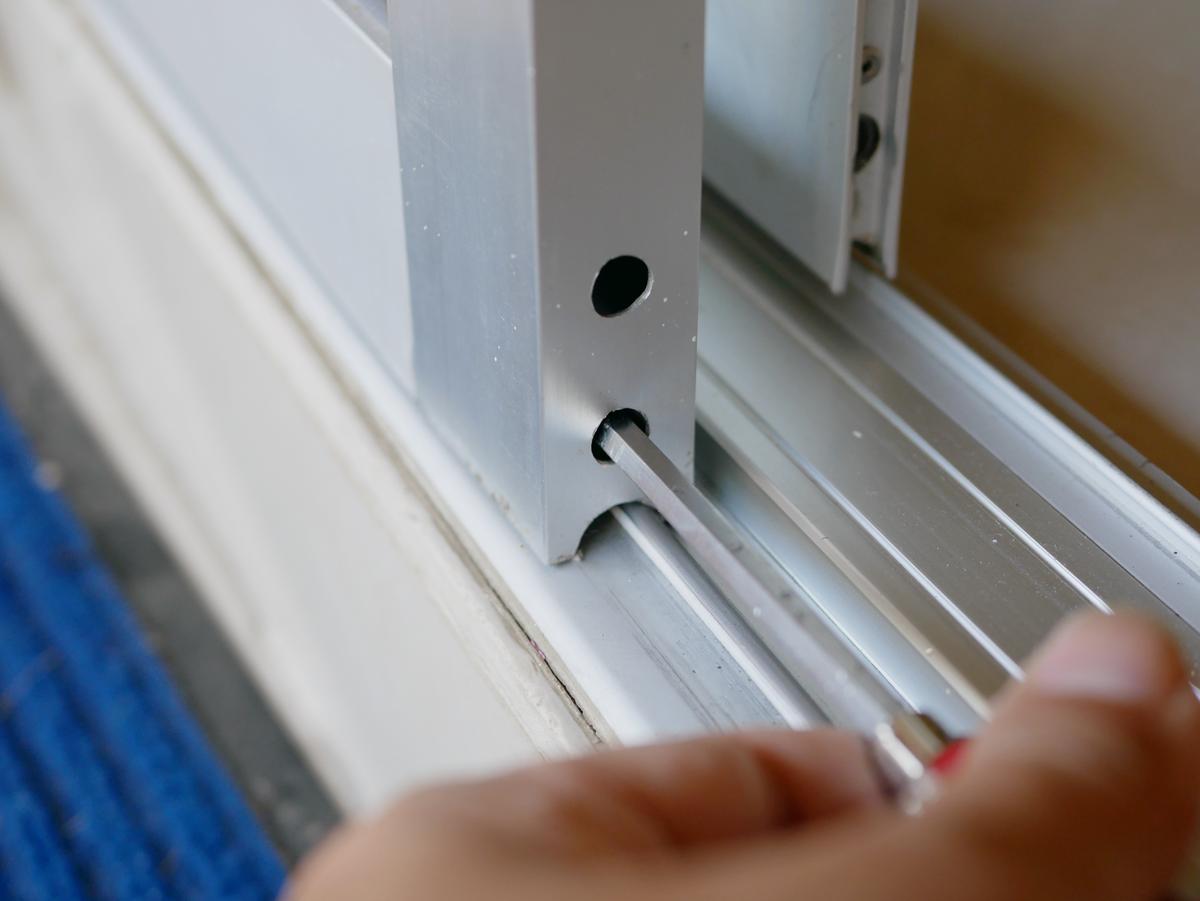
- Find the roller screws. Look low on each end of the door panel, on the inside face or the edge. You will see a small hole, sometimes behind a plastic cap. The screw inside sets the roller height.
- Raise the door. Turn one screw a quarter turn, then test. On many doors clockwise raises the panel, but check yours by watching the gap. Raise both ends by the same amount until the bottom stops scraping.
- Don’t overdo it. Too high and the top of the door can bind, or the lock won’t line up. Stop when the gap is even and the door rolls freely.
- Lubricate lightly. Mist silicone on the raised rail, wipe off the extra, and slide the door ten times. Our guide on what to put on a sliding door track explains which products to use.
- Test the lock. Close the door and lock it. If it slides well now but won’t latch, see sliding door won’t lock or latch.
If the screws don’t change anything
If you turn the screw and the gap doesn’t move, the roller is probably broken or seized inside the panel. Replacing it means lifting the door out of the frame. Our guide to worn sliding door rollers covers the signs and the job.
If the track is dented
Shine the flashlight along the raised rail. A dent or a flattened, worn rail will make the door bump at one spot. Small dents can be eased back. Larger damage is covered in sliding door track repair.
When to call a pro
- The door is still hard to move after cleaning, lubricating and adjusting.
- The adjustment screws spin, won’t turn, or change nothing.
- You hear grinding or metal scraping on metal.
- The door has jumped the track or sits crooked in the frame.
- Gaps around the frame have grown, or the door used to lock and now won’t.
In North Texas, shifting clay soil can move a slab enough to pull a door frame out of square. That is not something more spray will fix. Our sliding door repair team can replace rollers, true up the track and realign the door.
Not sure, or the fix didn’t hold? Select Sliding Doors repairs hard-to-open patio doors, rollers and tracks across Dallas–Fort Worth.
Call 469-915-5230 (Mon to Sat, 7am to 10pm) or send us a message.
Frequently asked questions
How do I make my sliding glass door slide easier?
Clean the bottom track thoroughly, then raise the rollers a little with the adjustment screws. Finish with a light coat of silicone spray on the rail. Those three steps fix most stiff doors.
Why is my sliding door suddenly hard to open?
A sudden change usually means something new: debris in the track, a roller that just broke, or the door jumping partly off the rail. Check the track and look at the bottom gap. If one end now sits lower, a roller has likely failed.
Should I use WD-40 on a sliding door track?
It is not a good choice for the track. It leaves an oily film that collects dust, so the door gets stiff again quickly. Use a silicone spray or a dry PTFE spray instead.
Which way do I turn the screw to raise a sliding door?
On many doors clockwise raises it, but it varies by maker. Turn a quarter turn and watch the gap under the door. If the gap gets bigger, you are raising it.
Why is my sliding door hard to open only in winter?
Cold makes weatherstrip stiffer and frames contract slightly. Moisture in the track can freeze on a cold night. Keep the track clean and dry and use silicone on the seals.