Is your balcony door putting up a fight every time you try to open it? You are not alone. Many homeowners and commercial property managers in the Dallas area struggle with sticky, misaligned, or heavy sliding doors. When a door refuses to glide smoothly, it is more than just an annoyance; it can compromise your property’s security and energy efficiency. The good news is that a proper balcony door roller repair can restore that effortless glide and save you from a costly full-door replacement.
Slide into the future with us! We understand that whether you are managing a busy household in Preston Hollow or overseeing multiple commercial properties in Plano, your time is valuable. You need a solution that works right the first time. Let us break down everything you need to know about sliding door roller repair, from identifying the problem to understanding the repair process.
Why Balcony Door Rollers Fail
Balcony doors face unique challenges compared to interior sliding doors. They are constantly exposed to the harsh Texas weather, including intense heat, humidity, and occasional heavy rain. This exposure accelerates wear and tear on the moving parts.
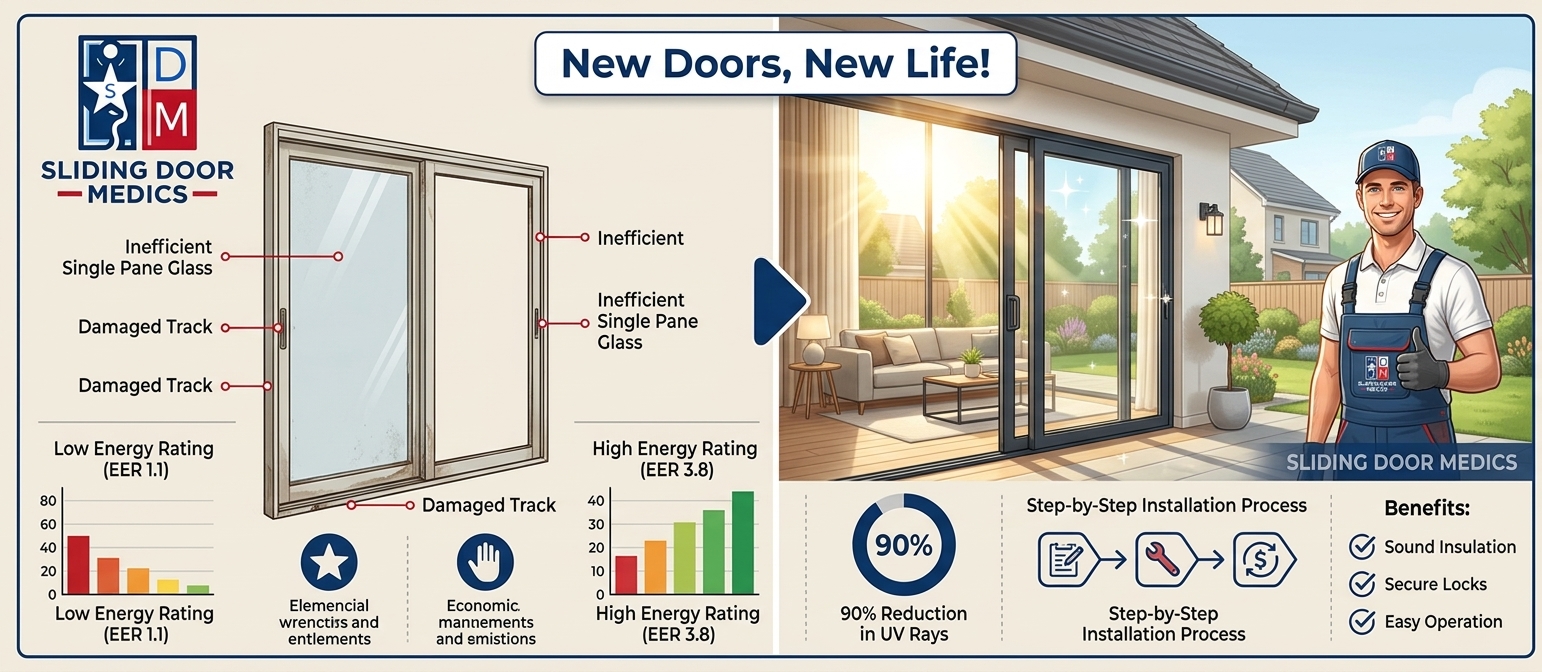
Over time, dirt, pet hair, and debris accumulate in the sill track. When this debris mixes with moisture, it creates a gritty paste that grinds against the rollers. According to the Department of Energy, exterior doors in poor condition contribute significantly to air leakage and energy loss [1]. If your door is hard to close, it is likely not sealing properly, allowing your expensive conditioned air to escape.
Furthermore, the rollers themselves bear the entire weight of heavy glass panels. Standard rollers can degrade, rust, or flatten on one side after years of use. When the rollers fail, the door drops, causing the metal frame to scrape directly against the track.
Signs You Need Sliding Door Roller Repair
How do you know if it is time for a repair? Look out for these common indicators:
- Excessive Force Required: If you have to use two hands and significant effort to open or close the door, the rollers are likely compromised.
- Grinding Noises: A healthy door should glide quietly. Scraping, screeching, or grinding sounds indicate metal-on-metal contact, meaning the rollers are no longer lifting the door off the track.
- Visible Track Damage: Inspect the bottom track. If you see deep scratches, gouges, or uneven wear, the rollers are dragging rather than rolling.
- Drafts and Energy Loss: A misaligned door cannot create a tight seal. If you feel drafts around the edges, your HVAC system is working overtime to compensate.
Addressing these issues promptly is crucial. Ignoring a stiff door often leads to permanent track damage, which is significantly more expensive to fix than a simple roller replacement.
The Repair Process: What to Expect
Whether you are a DIY enthusiast or prefer to hire a professional, understanding the repair process helps you make informed decisions. For those looking for comprehensive door and window services, knowing the steps ensures you get quality work.
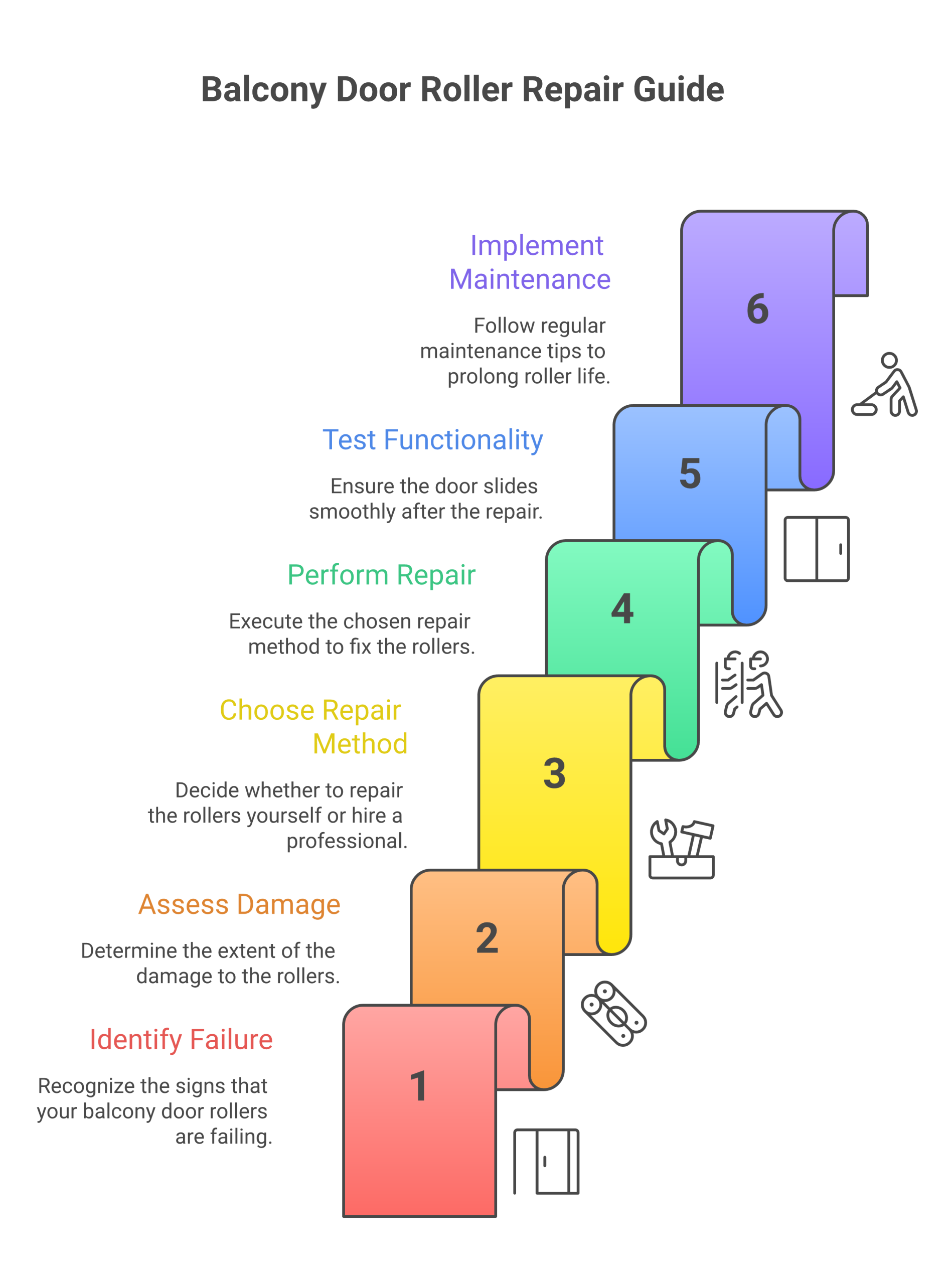
1. Removing the Door Panel
The first step is safely removing the heavy glass panel from the frame. This requires lifting the door upward into the top track to clear the bottom sill. Because balcony doors are exceptionally heavy, this is often a two-person job to prevent injury or glass breakage.
2. Inspecting and Cleaning the Track
Once the door is out, the track must be thoroughly cleaned. Andersen Windows recommends using a stiff brush and warm, soapy water to remove dirt deposits [2]. A clean track is essential for the new rollers to function correctly.
3. Replacing the Rollers
The old rollers are extracted from the bottom of the door frame. It is highly recommended to replace both rollers simultaneously to maintain balanced operation [3]. High-quality replacement rollers, such as tandem steel ball-bearing rollers, offer superior durability and smoother operation compared to standard plastic wheels.
4. Reinstallation and Adjustment
After installing the new rollers, the door is carefully placed back into the frame. The final, critical step is adjustment. Most sliding patio doors have adjustment screws located near the bottom of the door. Turning these screws raises or lowers the rollers, ensuring the door is perfectly plumb and glides smoothly without catching on the track.
Maintenance Tips for Long-Lasting Rollers
To maximize the lifespan of your newly repaired balcony door, regular maintenance is key.
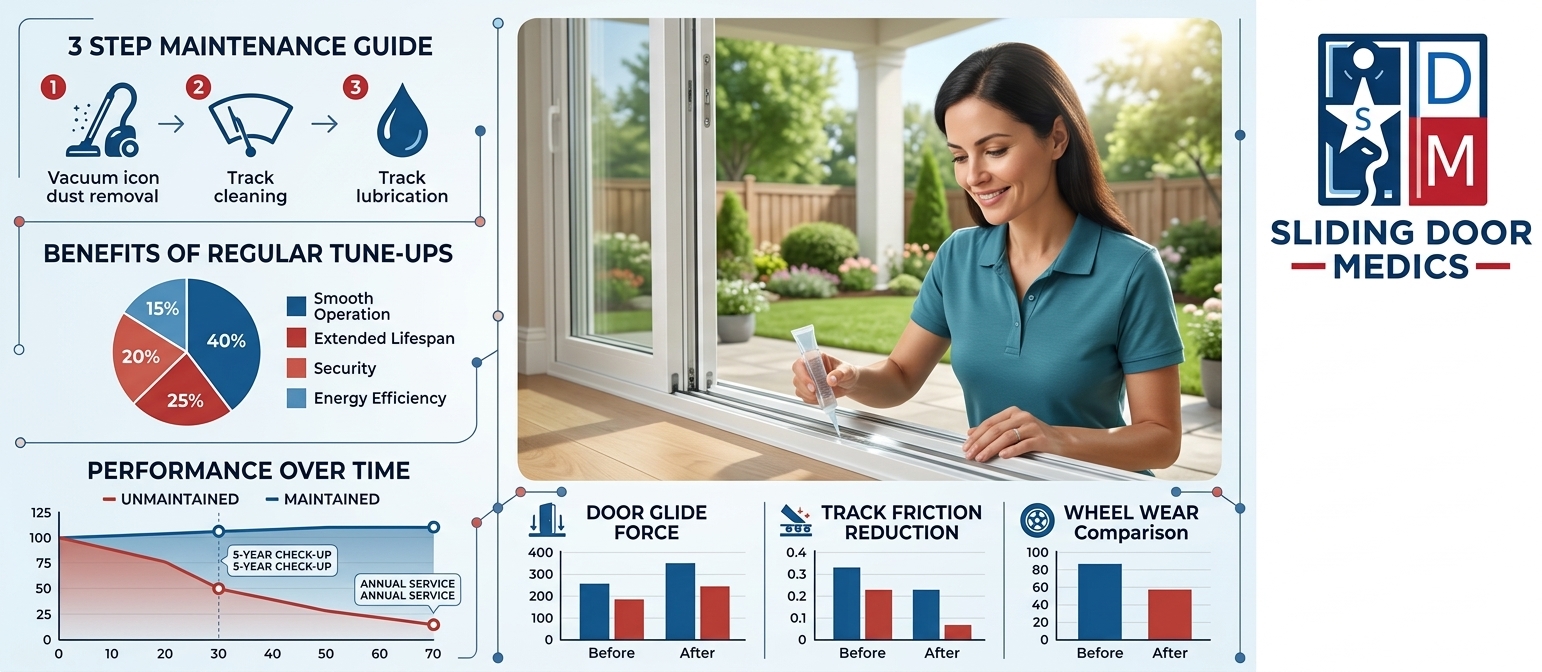
- Keep it Clean: Vacuum the bottom track weekly to prevent debris buildup.
- Proper Lubrication: Avoid using petroleum jelly or oil-based lubricants, as they attract dirt and create a sticky mess. Instead, apply a dry lubricant spray to the rollers [2]. Do not spray the track itself, as this can cause the door to slide uncontrollably rather than roll.
- Check the Alignment: Periodically check if the door is sitting evenly in the frame. If it looks crooked, use the adjustment screws to realign it.
Professional vs. DIY Repair
While some homeowners may attempt a DIY repair, balcony doors present specific challenges. The sheer weight of the glass makes removal dangerous without proper technique and assistance. Furthermore, identifying the correct replacement roller from hundreds of variations can be frustrating.
For commercial property owners and busy professionals, hiring a reliable service provider is often the most cost-effective choice. A professional can quickly diagnose the issue, source the correct parts, and perform the repair safely. The average cost for sliding glass door repair ranges from $150 to $800, depending on the complexity and parts required [4]. Investing in professional repair ensures the job is done right, backed by a warranty for peace of mind.
If it’s a door or a window (and it slides) – We Can Will FIX IT! We understand that you need a solution that lasts, not just a quick fix. Our team is dedicated to providing efficient, high-quality service so you can get back to your busy life without worrying about a stubborn door.
Conclusion
A malfunctioning balcony door is a frustrating problem that impacts your comfort, security, and energy bills. By understanding the causes of roller failure and the repair process, you can take proactive steps to maintain your doors. Whether you choose to tackle the project yourself or rely on professional expertise, addressing roller issues promptly will restore the smooth, effortless operation you expect. Ready to fix that stubborn door? Contact a trusted local professional today to schedule an inspection and get your balcony door gliding like new again.
If you need help with other types of doors, check out our resources on closet sliding door repair or learn how to adjust a patio door. For more extensive issues, we also offer sliding door installation and sliding glass door repair.
Sources
- Doors | Department of Energy — Exterior doors in poor condition contribute to air leakage and energy loss.
- Cleaning the Gliding Patio Door Sill Track and Lubricating the Panel Rollers — Recommendations for cleaning the track with soapy water and using dry lubricant spray on rollers.
- Replacing and Adjusting Rollers on Gliding Patio Door — Recommendation to replace both rollers simultaneously for balanced operation.
- How Much Does Sliding Glass Door Repair Cost? [2025 Data] — Average cost range for sliding glass door repair ($150 to $800).