
Track lubrication
Quick answer: track lubrication means cleaning a sliding door track and putting a thin, dry lubricant on it, usually silicone spray. It cuts friction so the rollers glide. Oil and grease do the opposite over time, because they hold dirt.
- Rail top, where the wheels ride: a thin line here is enough
- Channel floor, keep it clean and dry, never fill it
- Top track, wipe its inside edges with a sprayed cloth
- Weatherstrip, a little silicone keeps it supple
When lubricant helps, and when it stops helping
Lubricant only fixes friction from a dry track. Work down this list in order.
-
A squeak, or a dry, draggy feel on a clean trackVacuum, wipe, then a light coat of silicone spray.
Safe to do yourself
-
Stiffer weeks after you oiled it, with black gunkDegrease with rubbing alcohol, dry it, then switch to silicone.
Safe to do yourself
-
Still heavy after a full clean and a fresh coatThe rollers are worn or set too low: adjust or replace them.
Take care: two people
-
Grinding or metal scrapingFailed rollers are rubbing the rail. Stop forcing the door.
Call a pro
Fix it yourself or call a pro
- Safe yourselfCleaning the tracks, a light coat of silicone or dry PTFE spray, and wiping silicone onto the weatherstrip. The door stays in place.
- Take careOverspray makes tile and wood floors slippery and smears glass. Shield them, or spray onto a cloth, and keep a window open.
- Call a proThe door still drags after a full clean and a fresh coat, it grinds, or it has to come out of the frame.
Step by step: what to put on a sliding door track, and what never to use.
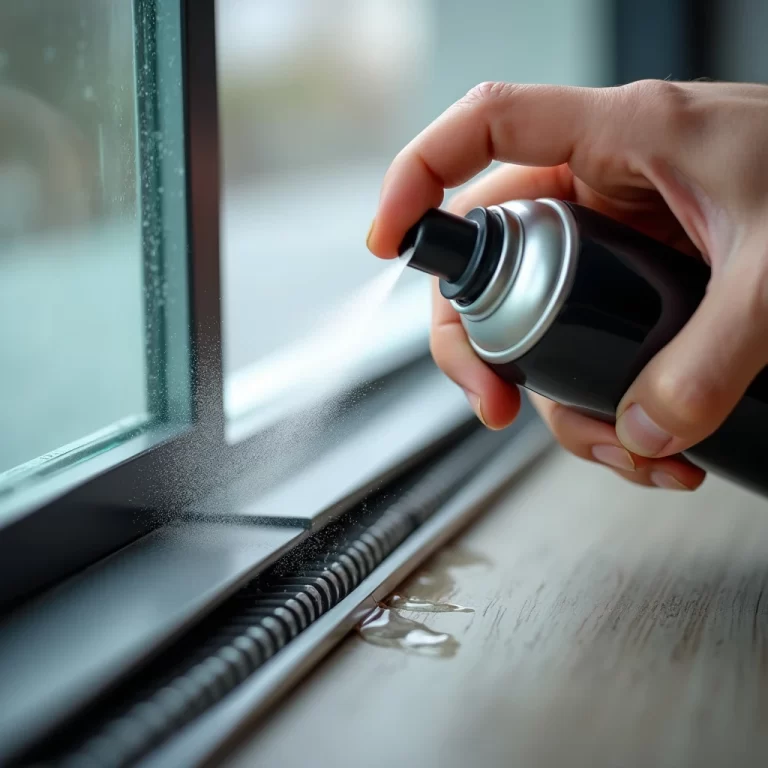
What goes on the track, in short
Still sticking after a clean and a fresh coat?
When lubricant stops helping, the rollers or track are usually worn. Select Sliding Doors handles sliding door roller and track repair across Dallas-Fort Worth. Mon to Sat, 7am to 10pm.
Questions people ask
Can I use WD-40 on a sliding door track?
Not regular WD-40. It is mainly a cleaner and water displacer, and the oily film it leaves collects dust fast. Use a silicone or dry PTFE spray instead.
Why is my door stiffer after I oiled the track?
Oil and grease trap dust and hair, which builds up into a sticky paste. Clean it off with rubbing alcohol or a mild degreaser, dry the track, then use silicone.
Should I spray the lock too?
No. Keep silicone out of the lock. Use a dry lubricant made for locks.
Related terms
Photo: own media library. Diagram: Select Sliding Doors.