
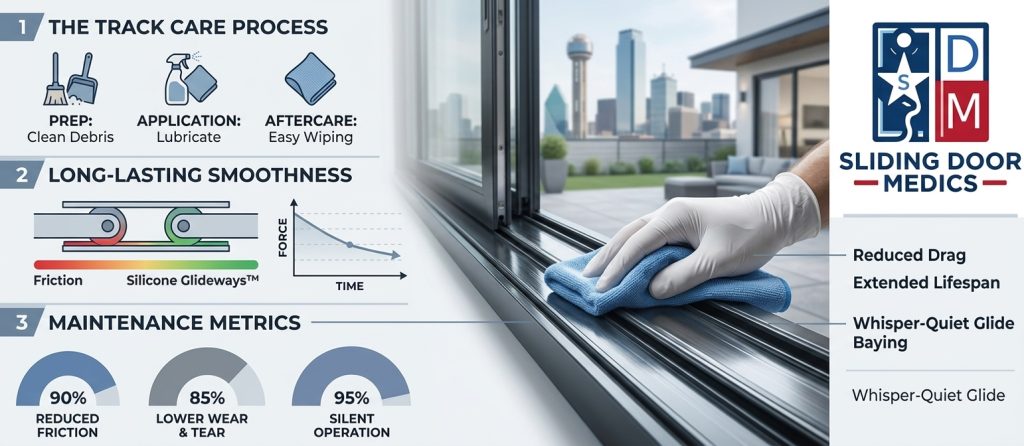
Hey Dallas homeowners and property managers! Ever notice that your once-smooth sliding doors, whether for your patio, closet, or commercial space, start to feel sluggish? It’s a common complaint, and often, the culprit is the door track. While many reach for a quick spray, understanding how to properly care for your door tracks for sliding doors care for silicone based is key to long-lasting, effortless operation. Silicone-based lubricants are fantastic, but they work best when supported by a consistent care routine. Let’s dive into making those sliding doors feel brand new again, focusing on maximizing the benefits of your silicone treatments – because we believe in solutions that stick, not doors that do!
Understanding Your Sliding Door Tracks and the Magic of Silicone
Sliding doors are a staple in many Dallas properties, offering convenience and optimizing space. The secret to their silent, easy movement lies in their tracks and rollers. Over time, these components can accumulate dirt, dust, and grime, leading to friction and frustrating sticking. This is where silicone-based lubricants shine, especially silicone for sliding door tracks.
Unlike petroleum-based oils that can attract dust and eventually gum up, silicone creates a dry, slippery film. This film significantly reduces friction, repels moisture (a big plus in humid Dallas summers!), and resists dust buildup, offering a cleaner, longer-lasting lubrication solution. It’s an excellent choice for maintaining the integrity and functionality of your sliding mechanisms.
The Power of Proactive Care: Beyond the First Spray
Applying a silicone based lubricant for sliding door is a great first step, but the journey to truly smooth operation extends beyond that initial application. Effective track care ensures the lubricant performs at its peak, protecting your doors and saving you from frequent repairs.
Regular Cleaning – The Foundation of Smooth Operation
Once you’ve applied a silicone lubricant, maintaining a clean track is paramount. Dust, pet hair, and debris can still accumulate on top of the silicone film, eventually hindering its effectiveness. We recommend a gentle cleaning routine at least quarterly, or more frequently for high-traffic doors, especially those exposed to the elements.
To clean, first, use a vacuum with a narrow attachment to remove loose dirt. Then, take a soft, lint-free cloth or a non-abrasive brush lightly dampened with a mild, all-purpose cleaner (ensure it’s not abrasive and won’t strip the silicone). Gently wipe down the track. Avoid harsh chemical solvents, as these can dissolve the silicone layer you worked hard to apply. The goal is to lift surface grime without removing the protective, slippery coating. This specific approach optimizes the longevity of silicone based lubricant for sliding doors.
Reapplication Strategies for Lasting Smoothness
Even the best lubricants wear down over time. For silicone spray for sliding door tracks, a reapplication every 6 to 12 months is generally a good guideline for residential doors, while commercial or heavily used doors might benefit from a boost every 3-6 months. The signs of needing reapplication are subtle at first – a slight increase in resistance, a faint grinding noise, or a less effortless glide.
Before reapplying, always give the tracks a quick clean following the steps above. A light, even coat is all you need. Focus on the inner grooves of the track where the rollers make contact. Remember, too much lubricant can sometimes attract more dust, so a little goes a long way. Consistent, thoughtful reapplication prevents buildup and ensures continuous, smooth performance.
For detailed guidance on various lubrication techniques, you might find our insights on how to properly lubricate your tracks incredibly helpful.
Protecting Your Investment: Addressing Specific Issues
Silicone’s properties do more than just reduce friction; they also act as a protective barrier. Its moisture-repelling nature helps prevent rust and corrosion, which is particularly beneficial for outdoor patio doors in Dallas’s varying climate. By resisting dust and grime buildup, silicone also reduces wear and tear on your rollers, extending the lifespan of your entire sliding door system. This preventative care is a smart investment, drastically reducing the chances you’ll need a full sliding glass door repair sooner than expected.
Troubleshooting Common Track Issues & When to Call the Pros
Despite your best efforts in maintaining silicone-lubricated tracks, sometimes issues persist. If your door still sticks, grinds, or feels wobbly, it might be more than just a lubrication problem. Worn-out rollers, damaged tracks, or misaligned door panels are common culprits that require a more involved solution.
For instance, if your closet doors aren’t closing properly, it could signal a need for more than just track care; you might need closet sliding door repair. Or if your patio door feels like it’s dragging or scraping, it could be an issue with the rollers or alignment. Trying to force a door that’s clearly struggling can lead to further, more costly damage. Our team of experts can quickly diagnose and fix these issues, ensuring your doors operate safely and efficiently.
When you encounter persistent issues, it’s often best to consult professionals. Sometimes, a complex sliding door repair is necessary, or you may need to adjust patio door which requires specialized tools and expertise. Discover more about comprehensive solutions for your property by exploring our services. You can also explore our expert insights on a variety of door and window topics.
Why Choose Local Dallas Expertise for Your Door & Window Needs
Maintaining your sliding doors is crucial, but sometimes, the job calls for professional intervention. For Dallas homeowners and commercial property managers, having a reliable partner for door and window solutions is invaluable. We pride ourselves on being a comprehensive ‘one-stop shop’ for quick, reliable, and guaranteed sliding door and window repair and installation services across the Dallas, TX area. Our commitment to customer satisfaction and a 10-year warranty mean you can trust us to get the job done right the first time, and we’ll even comeback and fix all that needs to be re-fixed 🙂. We’re here to ensure your doors slide into the future with us!
Conclusion
Caring for your silicone-lubricated sliding door tracks isn’t just about applying a spray; it’s about a consistent, thoughtful approach to maintenance. By regularly cleaning and reapplying your silicone lubricant, you ensure your sliding doors remain a seamless, silent part of your Dallas home or business. These simple steps extend their lifespan, prevent costly repairs, and keep your daily operations running smoothly. If you ever find yourself needing expert assistance, remember our team is always ready to provide swift, reliable service. Slide into the future with us – and enjoy the effortless glide!
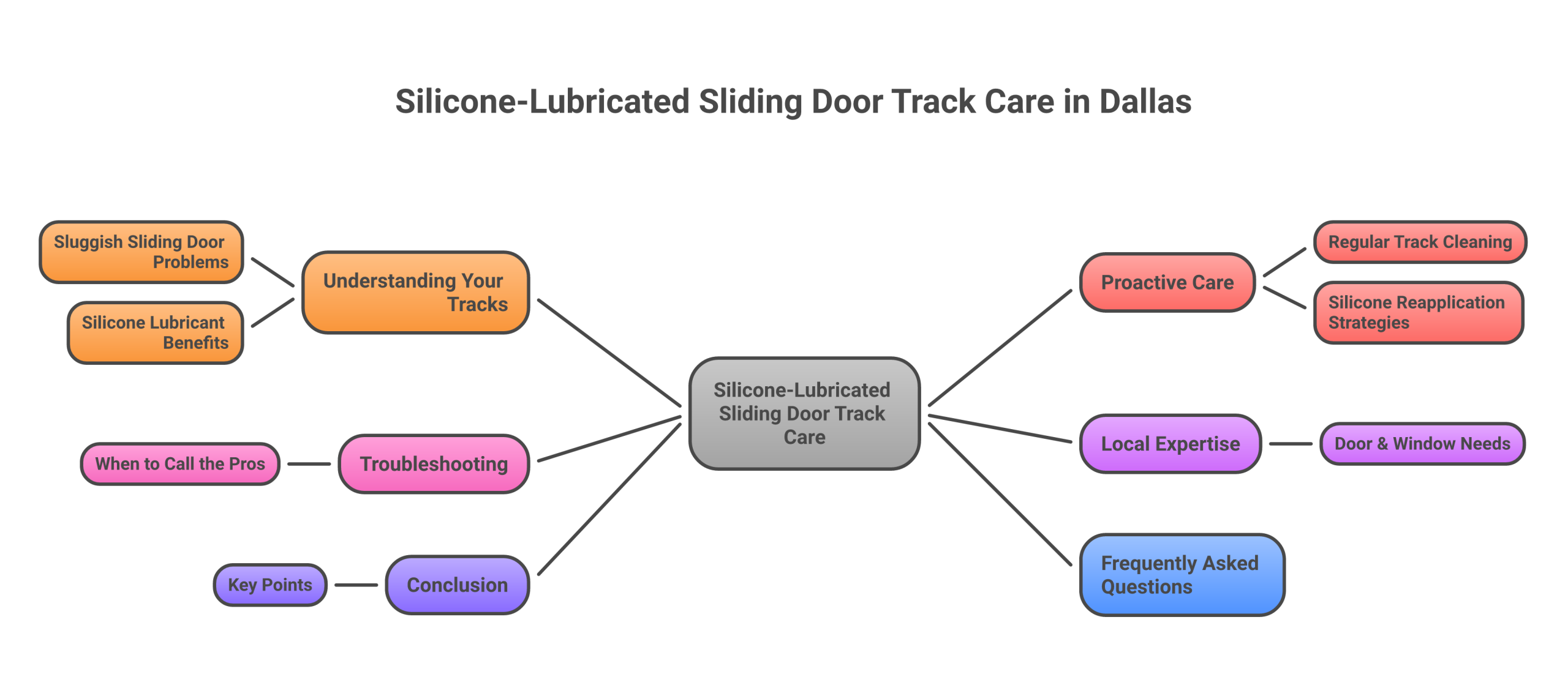
Frequently Asked Questions About Silicone-Based Track Care
- How often should I reapply silicone to my sliding door tracks?
For residential doors, aim for every 6-12 months. For high-traffic commercial doors or those exposed to harsh weather, consider reapplying every 3-6 months. Listen to your door – if it starts to feel resistant, it’s likely time for a refresh.
- What’s the best way to clean tracks after applying silicone?
Start by vacuuming loose debris. Then, use a soft, lint-free cloth lightly dampened with a mild, non-abrasive all-purpose cleaner. Gently wipe the tracks to remove surface grime without stripping the silicone layer. Avoid harsh chemical solvents.
- Does silicone-based lubricant attract dirt or dust?
A major advantage of silicone-based lubricants is that they generally do not attract dirt and dust like petroleum-based alternatives. They create a dry, non-tacky film that resists particulate buildup, making them an excellent choice for cleaner, longer-lasting track care.
- Can I use too much silicone spray on my tracks?
Yes, while silicone is great, excessive application can sometimes create a thicker film that might, over a very long time, collect more dust or become slightly tacky. A light, even coat is always sufficient and more effective than overspraying.
- When should I consider professional sliding door repair for my tracks?
If, after thorough cleaning and reapplication of silicone, your door still sticks, grinds, or struggles to move, it’s time to call in the professionals. This often indicates underlying issues like worn rollers, damaged tracks, or misalignment that require expert tools and knowledge to fix safely and effectively.