If you have ever wrestled with a stubborn patio door, you know the frustration. A door that sticks, grinds, or requires significant force to open is more than just an annoyance; it is a sign that your track and rollers need immediate attention. Knowing exactly what to use on sliding glass door track systems can save you time, money, and the hassle of premature replacements.
Over 75% of sliding door operational issues stem from a lack of proper maintenance and the use of incorrect lubricants. When dirt, pet hair, and grime mix with the wrong type of grease, they form a sticky paste that acts like sandpaper on your door’s delicate components. This guide will walk you through the best products to use, what to avoid, and how to keep your doors gliding effortlessly.
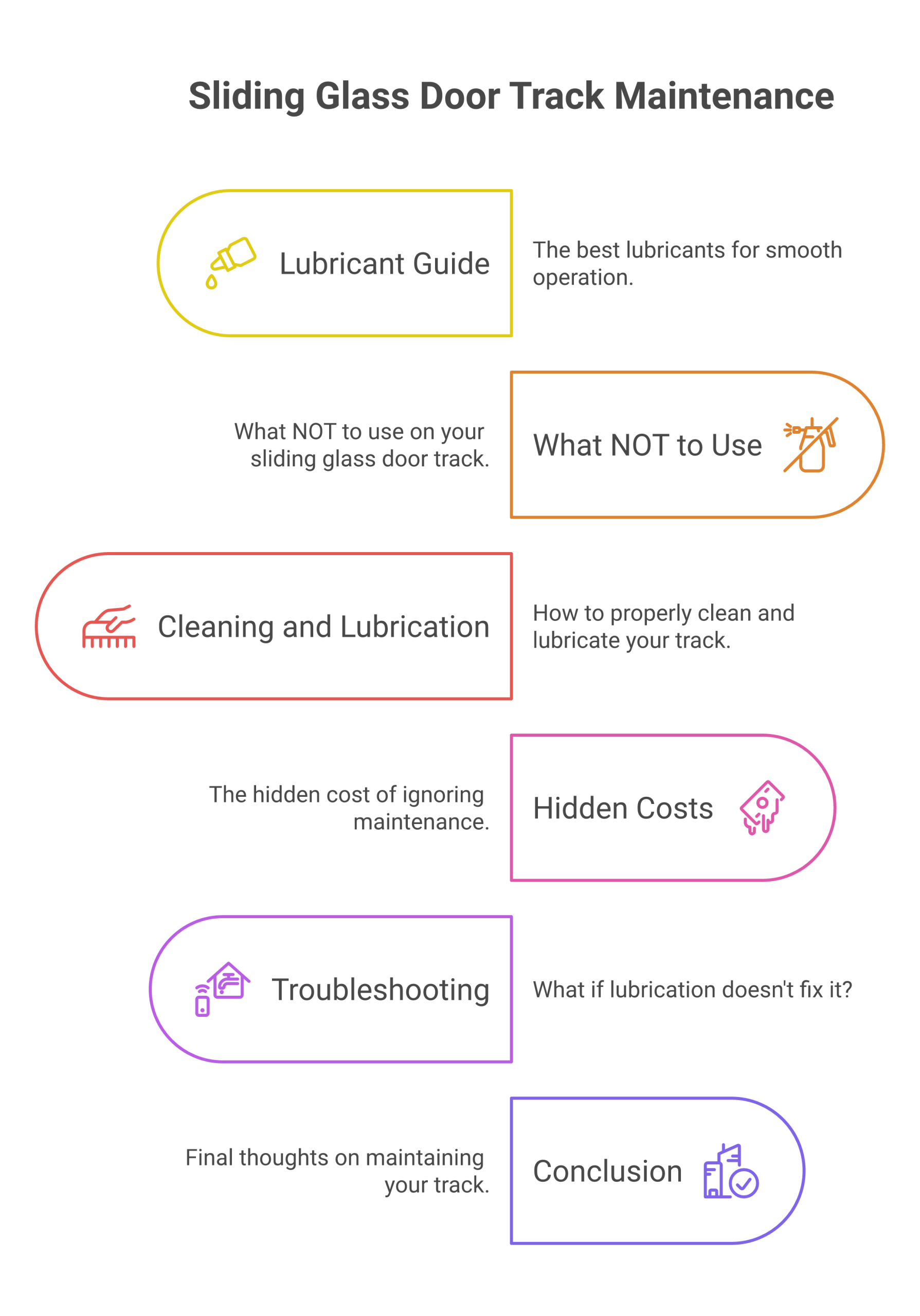
The Best Lubricants for Sliding Glass Door Tracks
Choosing the right lubricant is the most critical step in sliding door maintenance. The goal is to reduce friction without creating a magnet for debris. Here are the top recommendations based on industry standards and professional experience.
Silicone-Based Lubricants
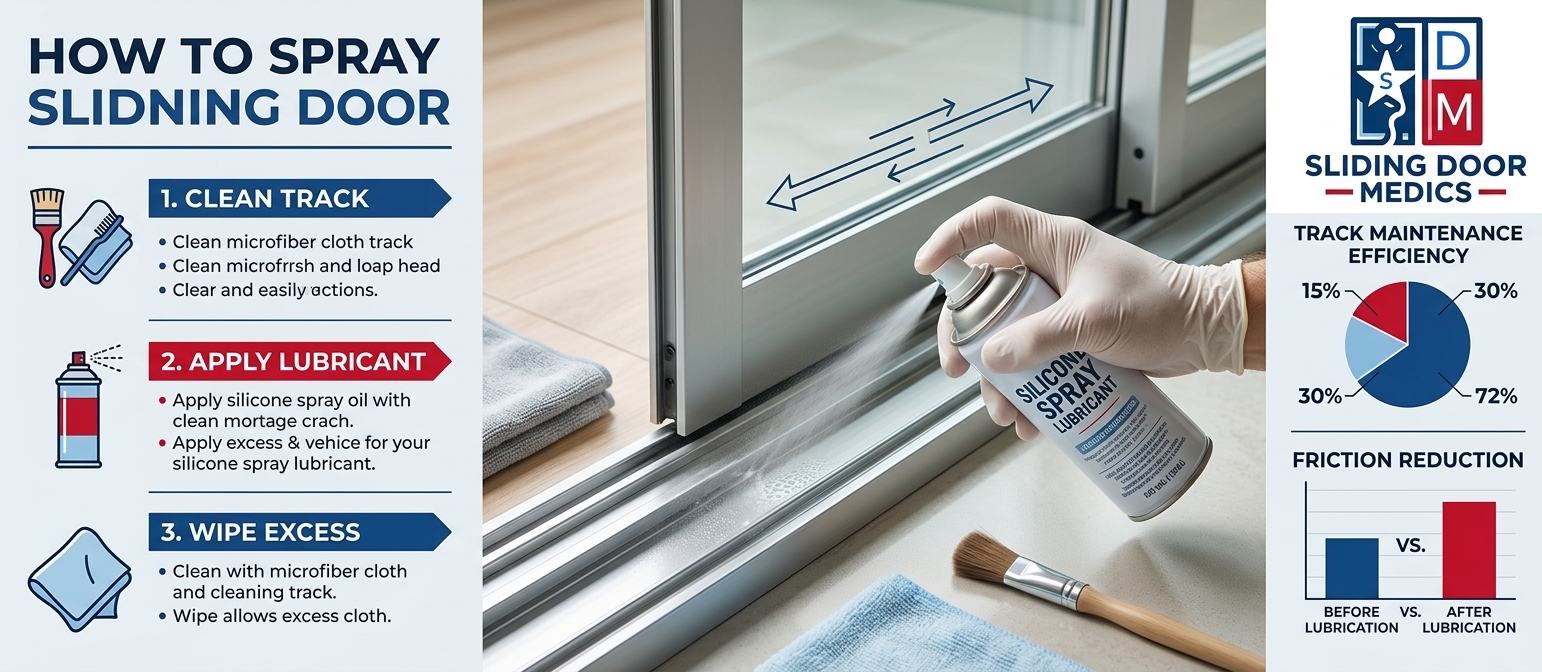
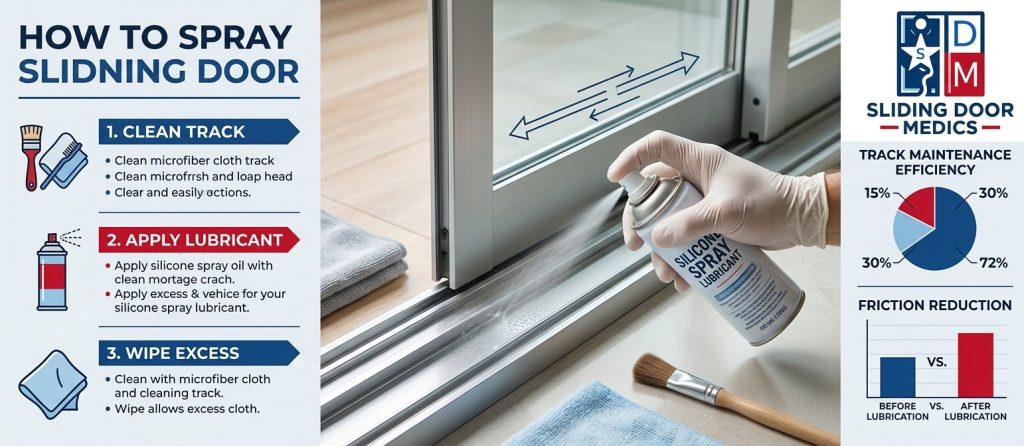
Silicone spray is widely considered the gold standard for sliding door tracks, particularly those made of vinyl or aluminum. Unlike oil-based products, silicone dries quickly and leaves a slick, non-sticky film. This creates a water-resistant barrier that repels moisture, making it an excellent choice for homes in humid climates or coastal areas.
When applying silicone spray, aim for a light, even coat along the cleaned track. Because it does not attract dust, it helps maintain the integrity of the rollers over time. For the best results, look for a high-quality, heavy-duty silicone lubricant [1].
PTFE (Teflon) Dry Lubricant
Polytetrafluoroethylene (PTFE), commonly known as Teflon, is another outstanding option. PTFE dry lubricants are specifically designed to reduce friction and wear without leaving any wet residue behind. This makes them incredibly effective in dusty environments where traditional greases would quickly become clogged.
Runners, sliding doors, and machinery rails benefit significantly from PTFE spray because it prevents sticking and reduces wear on moving parts [2]. If your home is prone to dust or you have pets that shed, a dry PTFE spray is often the smartest choice to keep your tracks clean and functional.
White Lithium Grease
White lithium grease is a thicker, more robust lubricant. It is highly effective for metal-on-metal applications and provides long-lasting protection against rust and corrosion. However, because of its thicker consistency, it is better suited for the internal roller mechanisms rather than the exposed track itself.
If you are performing a deep maintenance routine and have removed the door panel to inspect the rollers, applying a small amount of white lithium grease to the roller bearings can significantly improve performance. Avoid spraying it directly onto the main track, as it can attract dirt more readily than silicone or PTFE.
What NOT to Use on Your Sliding Glass Door Track
Just as important as knowing what to use is knowing what to avoid. Using the wrong product can turn a minor annoyance into a costly repair.
The Problem with WD-40 and Oil-Based Products
It is a common misconception that standard WD-40 is the fix for a sticking door. While it may provide a temporary improvement by displacing water and breaking down some rust, standard WD-40 is primarily a solvent, not a long-term lubricant.
More importantly, petroleum-based products and heavy oils remain wet and sticky. They act as a magnet for dirt, sand, and hair. Over time, this debris mixes with the oil to form a thick sludge that clogs the track and can permanently damage the rollers. Always check the label; if a product lists petroleum as a primary base, keep it away from your sliding doors [1].
How to Properly Clean and Lubricate Your Track
Applying the best lubricant in the world will not help if you spray it over a layer of dirt. Proper preparation is essential for long-lasting results.
- Vacuum the Track: Start by using a vacuum with a narrow crevice tool to remove loose dirt, dead bugs, and debris from the track.
- Scrub with a Degreaser: Apply a mild household degreaser or a solution of warm water and dish soap to the track. Use a stiff-bristled brush (an old toothbrush works perfectly) to scrub away stubborn grime.
- Wipe Completely Dry: Use clean paper towels or a microfiber cloth to wipe the track completely dry. Moisture left behind can interfere with the lubricant.
- Apply the Lubricant: Once the track is spotless and dry, apply a light, even coat of your chosen silicone or PTFE spray.
- Distribute the Product: Slide the door back and forth several times to ensure the lubricant is evenly distributed along the track and the rollers.
If you are looking for more detailed advice on specific products, check out our guide on what to use to lubricate the track of sliding glass door.
The Hidden Cost of Ignoring Maintenance
Ignoring a sticking sliding door does more than just test your patience; it impacts your home’s energy efficiency. Sliding glass doors, due to their large surface area, are already vulnerable to heat transfer. When a door is difficult to close or does not seat properly in its frame, it compromises the weatherstripping and the air seal.
According to the Department of Energy, single-pane glass or patio doors lose much more heat than other types of doors, and worn weatherstripping significantly increases air leakage as the door ages [3]. Performing routine and seasonal maintenance on a gliding patio door is the key to achieving optimum air seal performance [4]. A properly maintained door ensures that your HVAC system isn’t working overtime to compensate for drafts.
What If Lubrication Doesn’t Fix It? (Troubleshooting)
If you have thoroughly cleaned and lubricated the track, but the door still requires a wrestling match to open, you likely have a mechanical issue that requires more than a quick spray.
Worn or Damaged Rollers
Over time, the rollers at the bottom of the door carry a tremendous amount of weight. They can become chipped, cracked, or completely worn down. If your door makes a grinding noise or feels like it is dragging rather than rolling, the rollers likely need to be replaced.
Track Alignment and Damage
Sometimes the track itself becomes bent or dented from heavy foot traffic or dropped objects. A damaged track will derail the rollers, no matter how well-lubricated they are. Additionally, the door may simply be out of alignment. Most sliding doors have adjustment screws at the bottom that allow you to raise or lower the rollers. If you need help with this, learn how do you realign a patio door.
When to Call the Professionals
Removing a heavy glass door panel to replace rollers or repair a track is a challenging and potentially dangerous task. If you are dealing with persistent issues, it is often best to rely on expert sliding glass door repair. Professional technicians have the specialized tools and replacement parts to fix the problem safely and efficiently, ensuring your door operates perfectly for years to come.